Thursday, 30 April 2020

Gimme Shelter (1970)


Gimme Shelter
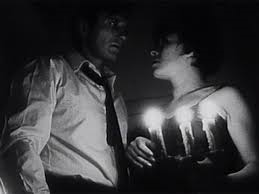
There is something about 1970 and music related movies. I believe “Gimme Shelter” is the third one if we include “Performance”. In fact, with “Performance and “Gimme Shelter” I got two Mick Jagger movies back to back.

Whereas Mick Jagger (the lead singer of The Rolling Stones, in case you have been deserted on a small island for the past hundred years) was merely an actor, albeit with a few songs, in ”Performance”, “Gimme Shelter” is about the real Mick Jagger and the band. Or is it? The further you get into this music feature the more you realize that this is not so much about The Rolling Stones as about the disastrous concert at Altamont near San Francisco, 1969.

We see The Rolling Stones in the editing room watching footage for a video, presumably the one we are watching. There are some clips to songs from an earlier concert in a traditional style, but eventually these disappear. The footage the Stones are watching is from the planning of their free concert at Altamont. Some lawyers are involved. Landowners back out until eventually a speedway racetrack is settled upon. Infrastructure is arranged apparently at breakneck speed and as this is a free concert, nothing is supposed to cost anything. The whole thing looks rather haphazard.

Eventually we get to Altamont itself and of course it is chaos, but the full extent of the chaos only becomes apparent as the bands start playing. Nobody expected in excess of 300.000 people. The stage and facilities are way too small and, most crucially some idiot decided it was a good idea to hire Hells Angels as security guards. Fights break out constantly, always involving the Hells Angels. One of the singers of Jefferson Airplane gets knocked down by the Angels. Some bands do not want to play and when the Stones try playing their songs they are constantly interrupted by fights or people wandering around on the stage.

The whole thing climax when a guy is stabbed to death by the Angels. The Stones are watching this on the film in the editing room and are shocked speechless.

While the Angels clearly were involved in a lot of the trouble, there is also a sense of selfish ruthlessness in the audience itself. A lot of the audience we see are seriously stoned and seem to see the concert as a ticket to behave as stupid and egoistic as possible. The parallel to Woodstock is obvious. There the film gave the impression of a totally different atmosphere. A friendly chaos as opposed to the unfriendly one at Altamont.

Back in the nineties I went to a lot of music festivals and experienced both kinds. The unpleasant ones got very unpleasant indeed. A Pearl Jam concert at Roskilde I left before it even started because I felt unsafe and sure enough, a few years later when Pearl Jam played again several people got crushed to death during their concert. Not cool.

“Gimme Shelter” does have a lot of music with The Rolling Stones and they do get around a lot of their famous songs. If you are into their music there is that. I am not a Rolling Stones fan so I was rather indifferent to the music. For me this movie was all about the horror playing out in Altamont. The total anti climax to Woodstock. I got a feeling the Stones never again gave a free concert…

Anecdote: George Lucas was a camera operator at Altamont. However, as his camera broke down his footage was not used.


Saturday, 25 April 2020

Performance (1970)


Performance
Okay, that was a bit… weird.

I watched “Performance two days ago and the extra material last night and have been thinking quite a bit about the movie since then and I still do not know what to think of it. It is fair to say it is unique. I certainly never saw anything quite like it, but what to make of it… I just do not know.

A plot summary seems almost futile since, although it at first appear to be plot driven, the thread is lost halfway through the movie. In fact, you could divide “Performance” into a part 1 and part 2 and be forgiven to think they were two entirely different movies.

Part 1 appears to be a crime story. Chas (James Fox) runs an intimidation team for gangster boss Harry Flowers (Johnny Shannon). He is doing great, lives in a flashy apartment, enjoying kinky sex with his girlfriend and gets plenty of kick out of bullying the enemies of Mr. Flowers. This all falls apart in a chain of events I did not entirely follow. Something about that he went hard on the wrong guy and so the team is sent to give Chas a beating, only Chas shoots one of the guys and now he is hunted by the gangsters.

In any case this story is told with so extremely short cross clippings as to make a music video director envious. It has the effect of keeping you on your toes, but it also leaves nothing explained so you have to make your own connections. It is obvious that Chas is a bad guy and it is with some satisfaction that the tables gets turned on him. Going into part 2 I was wondering if we would now see Chas coming to terms with himself, repent or something like this.

When Chas rents a basement room from Turner (Mick Jagger) we enter part 2. Turner is a seclude who used to be a famous rock star. His townhouse is his world now where he presides over his two girlfriends, Pherber (Anita Pallenberg) and Lucy (Michèle Breton). This world is totally distinct from the outside world. Lots of sex, drugs and cool music. Gender diffusion, existentialism and value-relativism. Technically the change is symbolized by the absence of the ultra-fast cross clipping. Everything is slower and weirder. Frankly, I am not certain what is going on in these scenes. The dialogue is disconnected and a significant part of it is severely influenced by drugs. Chas is exposed to everything he used to be opposed to and he ends up in a weird outfit, wearing a wig of long hair.

In this second part Mick Jagger’s role is… unclear. Maybe catalyst for a change. He does get to sing some songs and do some of his distinctive dance moves, but otherwise I am constantly wondering what it is he is talking about. As if he is the key to some greater truth that never really becomes tangible.

In the end the two parts does meet but without spoiling anything let me just say that the ending is ambiguous and inconclusive.

“Performance” contains a lot of the zeitgeist of the end of the sixties and is just about as confusing as a weekend eating funny mushrooms. It is also a movie that seems to have a large following which I attribute to its artistic value. As in any proper piece of art you can enter whatever meaning into it as you please. Frustrating and exciting.

I do not “get” the movie, but that does not mean it is bad. I just do not know what it is.

Probably best enjoyed with weed.


Saturday, 18 April 2020

M*A*S*H (1970)


M*A*S*H and Corona
The Corona update from me today is that, thankfully, we continue to do well. If you have been following news you may have noticed that schools have reopened in Denmark, at least up to 5th grade. My son started in school yesterday and that was an odd experience. Lining up to get into the school with two meters between each child, half size classes, far between tables and reserved spaces during recess. I hope it will work out. On Monday hairdressers are reopening…

Anyway, on to today’s movie…

I grew up with “MASH”, the tv series. Hawkeye, Pierce, Radar, Klinger, Hot Lips and all. It was one of the best shows on television and even after filming had ended it continued to air for decades. We do not have flow-TV anymore at home so I am a bit out of touch but it would not surprise me if it is still taking turns on some network or another.

Familiar as I am with the TV series, I never saw the movie “MASH” (or “M*A*S*H” as it should be rightly called). In fact, I had no idea there even was a movie until fairly recently. While I at first sight was disappointed that is somewhat different from the TV series, it soon won me over and now the series stands a pale imitation of the original.

I sense there has been some criticism of “MASH”, the movie, but for my part I have to admit that this is entirely my kind of comedy.

“MASH” is different from anything else I have encountered on the List so far, not least in terms of storyline. There is not much of a plot, no story arch, but merely a series of small stories, tableaux or intermezzos. In a sense it feels like a season of a television series cooked down to a two-hour movie, not the other way round. This may be off-putting, as if the movie is not going anywhere, but it actually serves its purpose very neatly. “MASH” takes place in an army field hospital in Korea during the Korean war and life there in the hospital is not an adventure in itself but a continuous nightmare of dying and mutilated soldiers in need of medical care. In counterpoint to this the staff of doctors and nurses are getting by through very dark humor, sex and irreverent practical jokes. It is a continuous state, only punctuated by the daily ups and down.

The chaotic style of “MASH” is also novel. Lines on top of each other, several people speaking behind each other and all the characters in a scene engaged in something as if they are not entirely aware where exactly the cameras are, which I understand was often the case. The result is something far more dynamic and realistic feeling than anything seen so far and a style that was frequently copied up through the seventies. Besides being engaging it also served as a sounding board for the jokes, which became so much more effective by seeming to take place on a naturalistic background.

It is odd to consider a movie with life and death operations funny. It is irreverent and somewhat blasphemous, but that was another novel agenda of “MASH”. Nothing was too sacred to be made fun of. Nobody is above a joke and only self-righteousness is not tolerated. This anti-authoritarian style was very much the zeitgeist in 1970, but “MASH” took it further than anybody else, which made it both loved and despised intensely.

As I mentioned, this type of irreverent humor is totally my jam and I found it outrageously funny. One scene is about the dentist “Painless” (John Schuck) wanting to commit suicide because he thinks he has become impotent. Hawkeye (Donald Sutherland) and Trapper John (Elliott Gould) setup an enactment of The Last Supper for Painless, exactly like the famous painting, including absolution before giving him a pill as he settles into his coffin. Then Hawkeye convinces the hottest dish of the nurses to attend the very well endowed dentist in his “death” state. Next morning Painless is up and around, very happy and the nurse leaves with a smile. The allegory is obvious, blasphemous and hilariously funny and entirely typical of the movie.

It is a wonder “MASH” got released at all. Fox hated it and wanted to shut it down, but the audience loved it and the audience is always right. “MASH” got nominated for 5 Oscars. It also gets one from me.


Friday, 10 April 2020

Patton (1970)


Patton
There are those years where a single movie sweeps the table for Academy Awards and 1970 was such a year. The movie that accomplished this incredible feat of securing seven Academy Awards including Best Picture was “Patton”. It goes without saying that I would expect this to be an absolutely magnificent movie given this sort of recommendation.

It is not a bad movie, not at all, but it is not a perfect movie either, but that probably says more of my personal tastes than anything else.

“Patton” is a biopic about the famous American general George S. Patton, a fellow who was a leading general in the American contribution to the war in Europe during WWII, but equally famous for his controversial statements.

We follow him from his takeover of the American forces fighting alongside the British against the Germans in Tunisia, then in Sicily and finally in France. Patton (George C. Scott) develops a rivalry with the British General Montgomery (Michael Bates), both being prima-donnas for the glory of war and a, at times strained, friendship with General Omar Bradley (Karl Malden), who is subordinate to him in Tunisia and Sicily, but after falling in disgrace Patton have to beg for a job in France subordinate to Bradley.

The focus of the movie is the portrait of the man George S. Patton and it makes a lot out of him being a nutcase. Patton apparently believed in reincarnation and thought he had taken part in numerous battles in the past. He is also completely in love with the idea of fighting a war and gets positively hyped at the thought of fighting. While his controversial comments keep getting him in trouble, they are largely misinterpreted by the press who seems to be fishing for something that can present him in a controversial light, while his real screw ups are his complete failure to see beyond the battlefield.

The flipside of the coin, him being a brilliant commander is strangely underrepresented. We are told he is good, we are shown that he is engaged and that he accomplishes a great push in France including a relieve of the besieged units in Bastogne, but we never see how he does this. We never catch a glimpse of why he is supposed to be brilliant and not just an overconfident cowboy who is willing to sacrifice soldiers for his personal glory. I know it may be difficult to present in a movie how he works out or execute some amazing maneuvers, but this is a three hour movie and without it the negatives becomes dominant. I am left with the question how this nutcase was allowed to command in the first place and being told that he was a great general without telling us how is just unconvincing.

Of course, this may be intentional. In 1970 Hollywood thought with some right that the armed forces were generally made up of trigger happy and warmongering officers and this sentiment was allowed to prevail in a movie that on the outside was supposed to celebrate one of the biggest heroes of the country.

Technically there is absolutely nothing wrong with “Patton”. The production quality is extremely high and an amazing amount of details in the sets and circumstances have been replicated to perfection. The opulence of the castles used as headquarters, the misery of battle, the terrain they are going through. Some are real locations, some are locations in Spain with a striking resemblance to the actual locations.

It is a long movie and approaching the end I felt it was starting to overstay its welcome but until then it did keep a decent pace and was enjoyable enough to watch, if you can say that about a war movie where people gets shot to pieces.

The question remaining is if it deserved seven Academy Awards? I suppose it depends on the competition. 1970 has not impressed my that much and I am not certain it would have swept the table in a better year, but there is a lot of class to this movie and it is a movie that holds up today. Recommended.


Friday, 3 April 2020

The Out-of-Towners (1970) and Corona


Off-List: The Out-of-Towners
Today’s update on the Corona situation here is that life goes on much the same as in the past weeks. We have that strange situation that apparently too few are getting the virus. The hospitals are getting fewer patients, the numbers have been dropping all week, and with this pace we will not only have spare capacity, it will take years to get through the epidemic. So, now the message is that some of the restrictions will be lifted, carefully, after Easter.  Let’s see how that turns out…

Today’s movie is the third off-List movie for 1970. I picked “The Out-of-Towners” mostly based on its reputation as a classic comedy and something to lift the spirits in these Corona times. I never saw it before, not even the remake, so I went in fairly blank.

“The Out-of-Towners” does what it is supposed to do fairly well, I suppose. The problem is more with me than with the movie. There is a certain class of comedies where everything has to go wrong for the protagonists. The worse, the better. If their lives and their relationships fall completely apart it is hilariously fun. Only, I don’t think these sorts of disasters are so funny. Well, sometimes, I suppose, but mostly not. “The Out-of-Towners”‘s comedy is entirely based on that Gwen and George Kellerman (Sandy Dennis and Jack Lemmon) have a miserable time visiting New York. Guess where that leaves me.

George has been invited for an interview in New York for a big promotion in the company for which he works. Bringing the wife along to New York he figures he can get a trip out of it, staying at the Waldorf-Astoria and eating at fancy restaurants. Unfortunately for Jack and Gwen thing does not go as planned. Due to fog in New York the plane circles for hours over New York and finally head off to Boston. The luggage is lost, they almost miss the last train to New York, there is no food left after queuing for hours and when they finally arrive in the middle of the night there is a taxi strike. And it rains. This is just the beginning and it goes pretty much downhill from there.

George is a manic and choleric type of guy. He does not put up with anything, put picks up a fight if he cannot get what he wants. Every time he hits a wall, which is about every five minutes, he will shout at the people he thinks are to blame and take down their names for later prosecution. This is a very long list of names. When he cannot take it out on anybody else, he takes it out on his wife. He is therefore a rather unpleasant guy, not unlike Donald Duck when he gets upset.

So, I am torn between feeling miserable for all their tough luck and feeling Jack deserves this for his annoying personality. As a result, this felt more like an ordeal than fun getting through the movie, which is really a shame. I am quite certain most people will find more enjoyment watching this than I did.

Checking the details of the movie on Wikipedia I noticed an astonishing detail. At one point, Jack Lemmon is standing upon a manhole cover when they hear a strange sound. Stepping aside the manhole blows up in an explosion and the manhole cover lands just centimeters from Jack Lemmon. This explosion was real, Lemmon could have been killed. Damn.

Anyway, the lesson from this movie must be that you should not refuse your meal on a plane. You don’t know when you will get one again.


Sunday, 29 March 2020

The Ear (Ucho) (1970)


The Ear
The corona virus status for today, 28/3, is that we are still doing fine. So far, we have gotten through this lightly. Otherwise there is not so much to tell. Our health authorities say that the numbers look promising, that we, in Denmark, will get off easier than Italy and that is something.

Today’s movie is the Czech movie “Ucho” (“The Ear”), a movie that was banned is Czechoslovakia immediately upon completion and was only dug out from oblivion in 88 or 89. I perfectly understand why this was banned. The surprise is that it was made at all.

“Ucho” feels like the love child of “Who’s afraid of Virginia Woolf” and “Das Leben der Andern”.

Married couple Ludvik (Radoslav Brzobohatý) and Anna (Jiřina Bohdalová) return from a party at Prague Castle with the elite in Czech politics. Ludvik is a senior official and therefore part of the privileged class. However, upon their return they find out that their home has been visited and somebody are lurking outside the front gate… Their conclusion is that this can only be the secret police and so start a night of paranoia. Ludvik panics and starts burning everything that can be construed as criminal and when they discover microphones all over the house and realize everything they have said all night is now known to the secret police, they suffer a break down.

Parallel to this story they are having a domestic row, which mostly consists of Anna screaming and shouting accusations and insults and complaints at Ludvik with Ludvik returning with the occasional sarcastic jab. Even when Ludvik realizes that something more sinister than an angry wife is going on Anne is not letting up. Eventually the seriousness of the situation sinks in for Anna and her rantings are briefly let up with concern and even affection, but alas, only briefly.

Ludvik keeps having flashback to the party and eventually all the innocent revelry takes on new and ominous meaning.

The story that nobody is safe in a totalitarian system is unmistakable and while extremely relevant I do wonder how on Earth director and producer managed to get so far as to actually complete the movie before it was intercepted. The criticism of the system in the East Block is so direct and unveiled that you have to be very naïve to believe that this would slip through. The terror and feeling of violated privacy have only been matched by “Das Leben der Andern” 36 years later and even if the topic had been allowed I doubt the establishment would find it comforting to learn that nobody is above the secret police. But then again, probably they already knew that.

The domestic row is, I understand, supposed to be an allegory for the relations between the people and the system, but I do not entirely understand this connection. Instead I found it rather annoying and unpleasant. Where Liz Taylor and Richard Burton’s venomous jabs were highly entertaining, Anna’s are shrill and annoying. In that I feel almost sympathetic to Ludvik who seems more interested in calming her down than scoring points. Had he slapped her to shut her up I could almost have forgiven him, but then again it felt as if this was exactly what Anna wanted to provoke as if any sort of passion would be better than his disinterest. As far as I could tell his premier crime was that he had forgotten it was their tenth-year anniversary. Life is so unfair…

“Ucho” is highly condensed in that it takes place over a single night, mostly in that single house and except for the flashbacks, with only the two of them, Anna and Ludvik. This allows the movie to be intense and focused. Yet I could not help thinking that we kept going over the same ground with very little progress, mostly in the form of things becoming more or less ominous. Perhaps it was simply me getting impatient with Anna’s screaming but it felt like a longer movie than its 94 minutes running time and that is a shame because the topic and message is remarkable and incredibly daring.

Ultimately the circumstances around the movie and its topic is more interesting than the movie itself, but that is enough to deserve a viewing.


Tuesday, 24 March 2020

Little Big Man (1970)


En god dag at dø
Instead of writing a grim story about the advance of the pandemic I want to be a little more optimistic this time. There are limits to how much bad news and dire prospect anybody can take. I keep looking for something positive and I found two things to lift the spirit a little. These days we are following the number of new hospitalizations here in Denmark closely and the rate does seem to get less steep. That is good news because that means the lockdown is working. It is too early to say for certain, but the curve does seem to be bending the right way. Secondly, the hospitals are testing new medicine that may be working. Again, too early to really know, but on the short term, this is what we need.

The movie today is Arthur Penn’s “Little Big Man”. Maybe the 1970 movie I have been looking forward to the most. It has been many years since I watched it last, probably not since the nineties. I remember my parents had it on VHS tape recorded from television and watching it again I realized I had forgotten almost everything about it. Even the wry humor of it.

Dustin Hoffman is Jack Crab who, wearing impressive make up, is an ancient man telling his life story to a journalist. That is a story with many episodes and phases, not unlike the later “Forest Gump”. As a child, Jack’s parents were killed by Pawnee Indians and he was adopted by Cheyenne Indians. He developed a close tie to the chief, Old Lodge Skins (Chief Dan George), whom he calls Grandfather. During a skirmish with the Cavalry he was captured and turned “white” again as he was fostered by the strict reverend Pendrake and his promiscuous wife. Jack became assistant to a  fraudulent medicine salesman, turns gunslinger, shopkeeper, got married, lost his wife in a Indian raid, returned to his tribe, got new wives etc.

The returning feature is that he shifts between a life with the Indians who calls themselves Human Beings and Whites who are generally a bunch of dicks. Jack is repeatedly knocked down and bounce back, but the true blows, the massacres against Indians he is witnessing, are not so easy to recover from. While Jack rarely actually does anything, he usually lacks the courage, he is a witness to everything.

What “Little Big Man” does is telling the sad story of the destruction of a people and culture but combining it with an unreliable and comic witness. The combination is bitter-sweet and you never really know whether to laugh or cry. Dustin Hoffman’s Jack Crabb is naïve but curious, a pacifist yet resolute and through his eyes the world is a weird place. The Indian are noble and civilized of mind, while the Whites are low and cunning and not a little stupid. As such it fits the anti-establishment sentiment of the period, finding a parallel between the atrocities against the Indians in the nineteenth century and “imperialist” America’s doings in 1970.

To me it was not so much the politics of the movie but the sheer adventure of Jack Crabb’s life that was the catch. It is fast paced and imaginative, surprising and quirky. At every turn Jack gets involved in something new and it is never boring. Western legends like Wild Bill Hickok and General Custer are presented as fools and western tropes are turned upside down. It is very entertaining indeed and the more than two hours of running time passes very quickly. For a tragedy this is really very amusing.

The only negative is that the fun and the silliness sometimes go too far into the ridiculous. It is difficult to believe that Custer was this much of a moron and it feels wrong to laugh with so many slaughtered women and children.  

Still, in the bigger picture this matters little. I would recommend this movie any day, particularly during lockdown.