Friday, 21 October 2022

Five Deadly Venoms (Wu Du) (1978)


Wu Du

My completely prejudiced and stereotypical image of a Hong Kong kung-fu movie is that of poor production value, thin if any plot, totally exaggerated acrobatics and dubbing on the funny side of bad. I feel convinced there are a lot of those out there, but “Five Deadly Venoms” (“Wu Du”) is none of the above and it may make me revise my view on Hong Kong movies.

The old master of the Poison school (Dick Wei) is dying and sends his last and youngest pupil, Yang Tieh (Chiang Sheng), on a mission: He must find the school’s treasure and give it to charity before his five older schoolmates does. The treasure is hidden with an old man and the five older schoolmates are bound to be looking for it. The kicker is that none of them know each other, except that they exist. The Poison clan, I suppose, are assassins and therefore live and work in hiding. In order to identify them however, the old master gives each a brief introduction: Centipede (Lu Feng), the superfast one, Snake (Wei Pai), who uses one hand for fast, high precision attacks, Scorpion (Sun Chien), with deadly kicks and darts, Toad (Lo Mang), with super strength and invulnerable skin and Gecko (Kuo Chui), who can climb and stand on vertical surfaces. Each of them superior to Yang Tieh.

Now start a cat and mouse game where the various assassins ally with one of the other to find the treasure and rat each other out. The town police force is fighting an uphill battle to get to the bottom of this and it does not help that their leader is completely corrupt and in the pocket of Snake. For a while Yang Tieh keep in the background, but eventually he joins the fight, but with or against who?

This is of course a kung-fu movie and therefore revolves around a lot of awesome fighting. And it is really awesome. The crazy stunts are kept to a minimum (though definitely not absent!) and the fighting looks fairly real. The victims of these fighters look terribly hurt and this is not a movie for the squeamish. The thing with these super fighters is that in one-to-one combat they cannot be defeated, but in a two-to-one situation they are vulnerable (except against henchmen, whose only role is to be afraid and die). So, in every situation the objective, as in real war, is to have local superiority.

What made this movie interesting for me though, was not the fighting but the intricate plot of hidden identities. In this way it can be places somewhere between an Agathe Christie story and a game of chess. Who is who? Who is really aligned with who? And will something happen to tip the balance (yes, it always does). Even without elaborate fighting sequences this would have been an interesting movie.

I was also surprised by the production value of “Five Deadly Venoms”. The colors where knife sharp and the settings were elaborate and to my understanding historically correct, although it is never clear exactly when it is supposed to take place, sort of a pre-europenized China. The acting is, well, not as bad as it could be, but I am never a good judge on East-Asian acting. What I consider overacting could well be par for the course. But most of all I was never bothered by bad dubbing. Maybe because my copy was in Chinese and therefore fitted well to the imagery, but even the grunts and sighing was not as bad or extreme as I would have expected. This movie really had production value.

In the final verdict it comes down to if the movie managed to keep me entertained and interested throughout and it did and plenty. And that makes it a recommendation from me.


Sunday, 16 October 2022

The Chant of Jimmie Blacksmith (1978)


Jimmie Blacksmith

The seventies seem to have been the heyday of Australian cinema. The list editors certainly were inclined to include a lot of movies from down under. I am not really surprised, they usually distinguish themselves with their high quality and production value. For anybody interested in Australian cinema in general I can recommend the ACMI in Melbourne, which I reviewed some years ago.

“The Chant of Jimmie Blacksmith” is the latest Ausie movie on the List (for me) and my the first 1978 movie. It is a movie of exceptionally high production value that takes on one of the harder subjects around, racism.

We follow a young fellow called Jimmie Blacksmith (Tom E. Lewis). He is half Aboriginal, half white and has been taken in by a missionary family to “take the black out of him”. This is around the year 1900, Australia is all about the Federation plans, but the real issue here is racism. The Aboriginals are at this time herded together in shantytowns and ragged camps with rampant alcoholism and prostitution. Jimmie is torn between his Aborignal family and culture and the European culture he is being schooled in. When it is time to leave the missionary home, he aims to make a life for himself as an upright citizen.

This is a very difficult target. Jimmie finds it hard to find work, and the employers he eventually finds, abuse and cheat him on the simple basis that he is a “Black”. The racism is truly rampant, and it is everywhere the same.

Eventually it is too much for Jimmie. His current employers, the Newby’s, refuse to pay him what he is owed (a small fortune) on the basis of him hosting some of his (black) family and they want his (white) wife, Gilda (Angela Punch McGregor) to leave Jimmie to find employment elsewhere. Something clicks in the head of Jimmie and he attacks and kills the women of the Newby household and then goes on a rampage among those people who have abused him.

The movie is based on a novel, which in turn is based on a real character. How much of the original events eventually made it into the movie I have no way of telling, but it is obvious that this is a (traditional) story about an outlaw in the vein of Billy the Kid and Ned Kelly, with the angle of explaining the villainy with rampant racism. In this way racism is the source of the problem and the murders simply the inevitable result of it. This angle of making a notorious criminal a justified freedom fighter was typical of the seventies revisionist stream and may feel a bit ham-fisted today.

I read the main story here as about the rampant racism, the systemic, the mental and the direct racism aimed at Aboriginal people and culture, and this is the earliest movie I have watched that goes this far. We even have a schoolteacher who puts it into words, listing all the evils done to the Aboriginal people and culture by Europeans, including killing 270.000 of them. A staggering number!

I do applaud the topic and the wish to bring it to attention and I have no doubt that the scenes of racism seen here are true enough. My objection to the movie is a mere general one, something that has little to do with this topic. We get to see a lot of Jimmie Blacksmith and from what we learn he is smart, he has pride and he is resourceful and he is not that prone to rash and emotional actions. Then how is he suddenly turned into a blood thirsty maniac, killing women and children at large? I fully understand he is being provoked and I also understand that it is building up over a long time, but it is both very sudden and very extreme and does not fit his character at all. I would have expected something smarter, something more just and effective, not this.

The explanation is unfortunately right in front of us. There is a real story about a half-blood mass murderer and racism is then appropriated to explain the murderer. Sort of a backward argumentation, turning an outright criminal into a justified revenging angel.

Sadly, I am struggling buying this angle. It is too forced, and that is a shame because the topic is too important to be trivialized.

Despite being one of the biggest productions at the time, the movie did remarkably poorly in Australia. I guess the Aussies at the time were not ready for this view on their past yet.

I give it a mixed recommendation but thumbs up from here on highlighting the source problem.


On an entirely different note, I watched “The Unbearable Weight of Massive Talent” last night on a plane and I strongly recommend it. That is by far funniest movie I have watched in many years. Maybe I should review it…


Tuesday, 11 October 2022

Eraserhead (1977)


Eraserhead

“Eraserhead” is the first David Lynch movie on the List, but certainly not the last. Lynch is a legend. Some love his movies, others hate them, but it is impossible to not have an opinion on them. Even when I am completely weirded out by his movies, there is something compelling about them that sucks me in.

“Eraserhead” is a good example of his most surreal movies. Even his most mainstream movies have surreal elements certainly, but few are as thoroughly surreal as “Eraserhead”. To describe it in an objective sense is almost pointless. There is a guy called Henry (Jack Nance) with very tall hair, who lives in a lousy apartment in a noisy, industrial neighborhood. Some of the scenes are dreams of his, others may not be dreams, but are certainly as weird as dreams, while others again seem to be Henry externalizing his impression of events around him, sort of his interpretation of what is going on. He is visiting his girlfriend at her parent’s house for a very strange dinner and learns that his girlfriend has given birth to a baby. Henry and his girlfriend, Mary (Charlotte Stewart), now live together in his apartment, taking care of the bay, only, the baby is a freakishly misshapen creature that is constantly crying. Eventually Mary gives up and leaves and Henry is left to care for the sick monster on his own.

Interspersed within this frame are the even weirder dream scenarios, which include a stage with a singing girl with puffy cheeks, a sexual encounter with the girl next door and Henry’s head falling off to be taken by a boy to a factory and made into pencils.

All this is presented in a gloomy black and white cinematography with dark industrial sounds and very little dialogue.

As soon as we are talking surrealist and certainly when it is Lynch, we know that everything we see is a metaphor for something else and that very little of it should be read for its face value. The task for the viewer is then to try to work out the metaphors. I cannot say I am good at that, but I have also resisted the temptation to read up on all the, most likely, very clever analyses out there. It feels good to build my own impression of what I saw.

To me, what we see is Henry’s emotional impression of his surroundings. His life is confined and claustrophobic, hence his small and shabby apartment. He is nervous around other people and projects his anxieties onto his family in law, the awkward interview externalized. The baby is an intruding little monster challenging him, hence it is depicted as a such. Maybe when he loses his head, he is eaten up by an uncaring world into something useless. Inside, he is himself a helpless freak of a child and the girl in the radiator is, well, salvation? An angel? Freeing him from being himself?

Maybe I am completely off, but the oppressive gloominess is undeniable. The nightmare that has closed Henry in, is shared with us and I feel as claustrophobic as he does, watching it.

Many of the images are Lynch classics. The girl on the stage element is also used in “Twin Peaks” and “Mulholland Drive” and to some extent in “Blue Velvet”. The man pulling the levers that control the world. The dark-haired seductress challenging the lead character.

“Eraserhead” feels like a mental state, an image on a feeling and as such there is meaning in everything and over time, I will likely uncover more details and get some understanding, yet the most important understanding is the unconscious one I experience simply by watching it.

“Eraserhead” is deeply unpleasant and wildly fascinating, difficult to love but impossible to let go of. And definitely not for a Sunday afternoon with the children.

Yes, I have grown to like David Lynch movies, even when I feel deeply disturbed by them.


Saturday, 8 October 2022

Sleeping Dogs (1977)


Sleeping Dogs

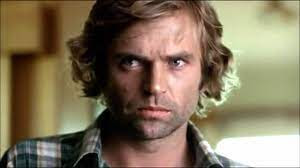
“Sleeping Dogs” is a new addition to the List from the major overhaul of the 10th edition of the Book. Its claim to fame is that it launched the careers of director Roger Donaldson and actor Sam Neill and according to several sources (the Book, Wikipedia) placed New Zealand on “the map” and hailed as the best New Zealandic movie ever. Yeah, I will come back to that later.

In a near future Smith (Sam Neill, and yes, all men here go by surname while the women go by first names…) leaves home due to a family dispute. We later learn that his wife, Gloria (Nevan Rowe), has an affair with the unsympathetic Bullen (Ian Mune). Smith venture on a life as a hermit on a deserted island off the Coromandel peninsula. Meanwhile New Zealand is thrown into turmoil. I am not at all certain about the details, but it is something about increasing energy prices (strangely familiar…) causing unrest, government provoking violent incidents so they can turn fascist and assert their power with military force.

Smith is drawn into this fight when it turns out his island is a weapon cache, and the authorities believe he is affiliated with the rebels. In a fascist system there are no innocents, so Smith is left with no choice by to escape, which in turn makes him a celebrity on the rebel side. Smith does not accept that role, he wants nothing to do with any fight and just want to be left alone and for a while get work as a handyman at a motel. That is, until the American army (!?) shows up headed by Colonel Willoughby (Warren Oates) and Bullen (who is now a militant rebel) coerce Smith into helping him with an assault on the soldiers. The evil guy, Jesperson (Clyde Scott) carries an uncanny resemblance to Putin…

Where “Sleeping Dogs” is best, the ordinariness of the scenery and the characters help lending a naturalistic feel to the story. This is a story of regular people in a regular world. The amateurishness of some of the acting efforts lends credibility to this angle. The same dilettante element, however, sabotage the credibility of other scenes. A lot of the actions and many of the characters are simply unbelievable when they are not just being ordinary people. The only actors who really get away with their roles are Sam Neill himself and Warren Oates. This element is not limited to the acting efforts but also the script, the choices made by characters and even the plot.

I did wonder a lot about the plot and the aim of the movie. What is it really about? The threat of fascism? An antiwar statement? Anti-establishment? It seems to say that people in power, aka. the government, will want more power and use any excuse to get that, because control and power is… well what governments want. That, maybe, what “the righteous” should do is simply stand back and refuse to take part in the power struggle. It feels as if the authors have taken a banana republic model and applied that on a modern western country as if New Zealand in southern Vietnam. Interesting, maybe even an amusing, idea, but it just does not work out. The turmoil element and civil war aspect just does not go well with New Zealand. It is not a Trumpish mid-western state after all and it is not El Salvador or, yeah, South Vietnam.

Somewhere between the low production value, weak plot and confusing message of the movie I found it increasingly difficult to buy into and really, the only reason to include it on the List is the launching of careers. As to calling it the best NZ movie ever is an insult to much better NZ movies in the nineties.

So, not much of a recommendation from me.       


Sunday, 2 October 2022

Suspiria (1977)


Suspiria

The (in)famous Dario Argento, master of the giallo genre is back, as gory and flamboyant as ever.

“Suspiria” takes place on a private ballet school in the Black Forest of Germany. It is a gothic looking place in a gothic looking town, but an otherwise harmless looking place. As Susan Bannion (Jessica Harper), an American student of ballet, arrives at night, in torrential rain, a girl is running away from the school, mumbling incoherently. Susan is refused entry to the school. Shortly after we see the escaped girl getting horribly killed by a demonic looking creature in one of the goriest openings to a movie I ever saw.

That sets the stage pretty well.

When Susan arrives at the school the next morning, everything looks neat and quiet and completely harmless. The teachers are a bit old school, but that is to be expected. Susan is befriended by one of the girls, Sarah (Stefania Casini) who is convinced something sinister is going on at the school. True enough, strange events start happening: Maggots raining down from the roof, the blind pianist getting killed and eaten by his dog and Susan getting so sleepy in the evenings…

When Sarah also goes missing, Susan is truly alarmed and discovers that the ballet school has a past involving witchcraft. From there it gets pretty wild.

The most powerful element of “Suspiria” is not even the wildly gory parts, but the very strong, saturated colors and backlighting though blankets and windows. The otherworldly and psychedelic effect of this sets a stage for an environment where literally anything is possible. The soundscape goes along well enough, but probably better in the day. The visuals however were clearly adopted by David Lynch and for long parts I felt I was watching Blue Velvet or Twin Peaks. To begin with it feels exaggerated, as if to create a cartoonish or expressionist environment, like “Das Cabinet des Dr. Caligari”, but the further we get into the movie, the more I bought into this scenery.

Unfortunately, “Suspiria” was never able to entirely shed the cartoonish, or amateurish, feel, at least to me. Part of that was the over-the-top goriness, but more than anything the ridiculous dubbing. The tenor of the voices was so disconnected from the actual scenes that I had the impression of voice actors sitting in a cozy room reading up from a script while drinking coffee. It had the not-intended effect of making me giggle over the misfortunes of the characters rather than being horrified.

It is not as if the movie does not try, though. So many scenes are set up to be almost intolerable to watch so you want to cry “STOP!”, and with proper dubbing it may have worked. Instead, it often became comical, and it made me wonder if I should have watched it in Italian language instead.

I am not a fan of gory movies and I do not feel thrilled about people getting chopped to pieces, but I will grant that “Suspiria” is very inventive at building up a mysterious parallel universe and I will give it points for that. And some extra points for the laughs the ridiculousness of it generated.


Tuesday, 27 September 2022

Soldier of Orange (Soldaat van Oranje) (1977)


Hemmelig mission

Paul Verhoeven and Rutger Hauer is back and this time in a very different movie from “Turkish Fruit”. “Soldier of Orange” (“Soldaat van Oranje”) is a war epic, the kind of movie that celebrates heroic and patriotic feats, where men are real mean and women pretty and… not so much more. Really far away from “Turkish Fruit”. Yet, it would not be a Verhoeven movie if it did not have a subversive element or two.

In 1938 a group of young men are starting university in Leiden. They become friends and we see them together in a number of settings, including a photo session. Each of these young men will have a different fate during the war. Erik (Rutger Hauer) is the one we follow the most. He is not, like Robby (Eddy Habbema), drifting towards the resistance, nor is he like Alex (Derek de Lint) joining the Germans. Circumstances, such as when Jan (Huib Rooymans) gets in trouble for being a Jew, forces him to commit and soon he is wanted by the Gestapo. Erik and Guus (Jeroen Krabbé) are spirited away to England, where they meet the Dutch Queen and are soon engaged on a secret mission to smuggle out some high-profile leaders for Queen Wilhelmina’s exile government. A mission that does not exactly go according to plan.

Erik Lanshof was a real character, and the movie is based on his own story. Tying a story to real events has the distinct advantage, especially when filmmakers are true to the story, that the plot does not follow a standard storyline. There are twists and turns here that a classic Hollywood screenwriter would not have liked, and few of the characters are as black and white as the almost cartoonish format will have us think. This is also the Verhoeven trick, to lead us into a cliché world of exaggerated color and characters that are easy to classify (think “Starship Troopers” and “Robocop”) and then undermine it by throwing in some gray or just some ugly reality.

The young men think they are invincible. A little war will just be fun. Teasing the Germans is just next level of pranking and suddenly it is deadly serious and death is really ugly. Guus, the overconfident womanizer, gets a very bad wake up call and his demise is like the ugliest of all. What is a hero really out there in the real world? How many terrible mistakes by the heroes do we not hear about?

Speaking of Guus, I had this strong feeling that I knew his face from the moment we see Jeroen Krabbé in the first scenes, and then it struck me, its Dr. Nichols from “The Fugitive”! It is such a distinct face.

“Soldier of Orange” is a big production, the biggest in The Netherlands at the time, and it shows. There are no half measures on the production value and it feels impressive as a grand film and maybe that is its problem. At least until halfway in. It feels like flag-waving, as The Netherlands wants to celebrate its heroes. Maybe they needed that as a counterpoint to the Anna Frank story which is the one most people know. But when I caught the Verhoeven undercurrent, when imperfections and gray zones sneak in, when humans become small, then I started to appreciate the movie. It is random circumstance that set people up as friend or foe, as hero or coward. Even the worst traitor is fighting for something. Even the biggest hero fails. That is total Verhoeven and that is, I believe, why this movie is on the List.

 I certainly liked it better than “Turkish Fruit”.


Monday, 19 September 2022

The American Friend (Der Amerikanische Freund) (1977)


Den amerikanske ven

The seventies was a fertile period for many young directors and I am enjoying watching the early movies of directors who would grow into famous and influential filmmakers. Wim Wenders is another one of those and though “The American Friend” was by no means his first movie, it was his international breakthrough.

“The American Friend” is a neo-noir, which is already a plus for me. We never learn exactly what is going on, just bits and pieces. Lighting is faded, it is always either sunrise or sunset as if the characters are living in that half-light. Everyone is doomed in some way or another but retain some level of coolness. In the case of “The American Friend” there is the additional element of naturalism that just makes it scarier. This is not a cartoonish world but a very familiar one.

We follow the story through two viewpoints rather than one. Tom Ripley, American, (Dennis Hopper) deals in art forgery from a base in Hamburg and Jonathan Zimmerman, German, (Bruno Ganz) is an art expert who due to a blood disease now just do picture framing. They get in contact at an art auction where Jonathan recognizes Tom as a fraud and refuses to shake his hand. In return, when Tom is contacted by a gangster, Minot (Gerard Blain) looking for a hitman, he recommends Jonathan and exaggerates his poor health.

Minot contacts Jonathan and suggests that he take the contract to secure funds for his wife and son. Jonathan first refuses, but Minot tempts him with an expensive second opinion on his condition in Paris. One Minot of course falsifies. So, Jonathan becomes a hitman and through a very intense pursuit actually succeeds. Minot wants to follow up with a second hit, but Tom has come to like Jonathan and intervenes and eventually they have to fight together against a bunch of gangsters.

I never understood what the gangster war is about. Who are the people they are killing? And why? And why are they suddenly after Tom and Jonathan? But neither do Jonathan. Or Tom for that matter, though at least he understands how dangerous they are. And it is that uncertainty, that unseen, unexplained presence that makes them terrifying. Jonathan is in far deeper than he can even understand and suddenly finds himself living a double life apart from his wife and child. Who are both as adorable and innocent as it is possible to be.

This half-life, half-light and inability to control your own life is at the heart of this movie and it works surprisingly well. It is not quite a suspense movie, and it is not quite a European art movie but it is somewhere in between and succeeds at that.

I love the language element. Characters are using “natural” language, which means an odd mix of German, English and even a bit of French. Accents are sometimes heavy, but natural, and it helps me believe in the story. The Book mentions an American-European conflict, but I do not see that at all. There are no misunderstandings here, just the haziness of reality using people from different places to give it an international and even more mysterious flair.

Noir, or neo-noir for that matter, never have happy endings and it is no spoiler to say that this movie is true to form, but there is a sense of closure that provides some satisfaction and that is another plus in my book. It is an ending I will probably contemplate for a while.

In fact, the more I think about it, the more plusses this movie accumulates, so I guess this ends up with a recommendation from me. And hopefully a lot more from Wim Wenders on the List.